It’s easy for home improvement projects to get more expensive than planned. Most of the time, the place we spend our money most is on materials. You walk into a hardware store, not knowing exactly what you’re going to buy, and end up walking out with double what you thought you’d spend. However, you can find good materials without paying double the amount of money at retail, nor do you have to waste your whole Saturday looking for deals that probably don’t exist.
You can figure out which materials are worth spending full price on, which ones have better substitutes, and where to find cheap materials for your next project.
When Retail Makes Sense
In some cases, it makes sense to simply go to a hardware store, regardless of whether it seems like you’ll be over-paying. Structural projects using new lumber are examples of situations in which you will need to purchase from a real lumber supplier. Consistency, and how lumber is graded, are important factors in determining quality, and taking risks to try and save money on substandard wood could lead to costly repairs.
This same principle applies to fasteners, adhesives, and finishing materials. The cost difference between purchasing these materials from a hardware store versus searching for used materials is typically small enough that the ease of simply purchasing new materials from the hardware store is worth the extra cost. A box of screws costs what it costs; hunting through boxes of used screws in hopes of saving a few dollars rarely results in both the time and aggravation of doing so.
The same logic applies to electrical and plumbing supplies. In these areas, it is generally more cost effective to purchase new materials from a reliable supplier, rather than attempting to find used materials. While there is always a risk associated with using salvaged materials in systems that impact safety, or could result in water damage, the potential savings do not justify those risks.
Salvage Yards Offer Great Deals
Many types of materials are available at significantly lower prices than retail at salvage yards and recycling facilities. This is particularly true for materials in which the age and prior use does not negatively impact its performance. Examples include bricks, pavers, and concrete blocks. These materials perform equally as well as new materials, and the savings can be quite substantial.
Old growth timber from demolition sites is often of higher quality than the lumber currently available from suppliers. Additionally, salvaged timber has a unique character that new lumber cannot replicate. The downside is that it takes more work to remove nails, plane the surface, cut around damaged areas. Whether or not this tradeoff is acceptable will depend upon the scope of the project and the amount of time available for completion.
Salvage yards can be a treasure trove for doors, windows, and architectural details. However, as with any purchase, you must inspect each item carefully before deciding to purchase. A beautiful old door may not fit the opening, or may require extensive repair to operate properly. If this occurs, the bargain will quickly disappear.
Pallet Wood: The Reality Behind the Trendy Social Media Posts
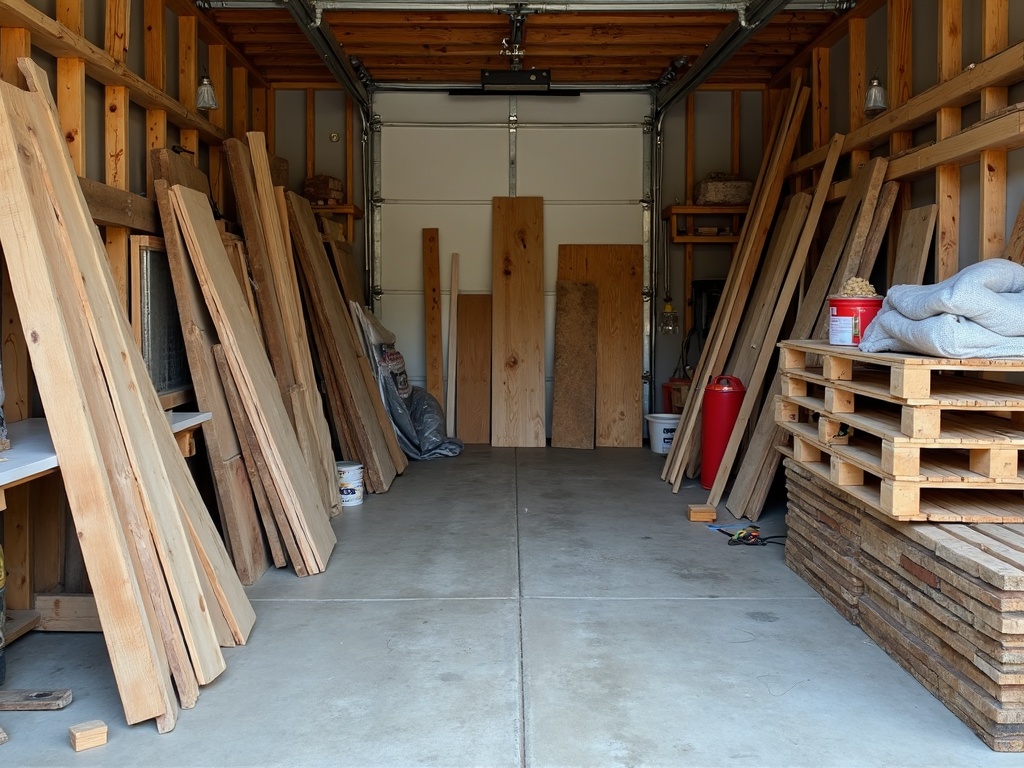
Pallet wood has become quite popular among DIY enthusiasts, and can be a very affordable option for materials. However, there is a lot more to the story than what is posted on social media. Pallet wood can be suitable for many uses, such as outdoor projects, or shelving in a garage or workshop where aesthetics is not a concern.
Companies that provide used pallets for sale, such as Used Pallet in Melbourne and similar businesses throughout other cities, can provide pallets in a variety of condition levels, at least providing assurance that the pallets are solid enough to have been used commercially. In contrast, random pallets found behind stores could have hidden defects, such as damage, rot, or chemical treatments.
Processing pallet wood into usable pieces is a large amount of work. Each piece of pallet wood must be de-nailed, many pieces must be planed to create smooth surfaces, and the yield of usable wood from a pallet is typically lower than anticipated. While small DIY projects may be able to utilize pallet wood, for larger DIY projects, the time spent to process the pallet wood will likely exceed the cost savings from purchasing lumber at retail.
Another issue with pallet wood is the treatment applied during the manufacturing process. Pallets that are heat-treated (HT) for export to countries prohibited from methyl bromide (MB), are generally safe for interior use. MB-treated pallets should be avoided for any projects involving furniture or products that will be stored indoors.
When to Purchase in Bulk
For larger DIY projects, purchasing materials in bulk directly from suppliers instead of through retail outlets can result in significant cost savings. Items such as bagged concrete, gravel, sand, and lumber in standard sizes, often cost substantially less when purchased in large quantities.
However, there are several considerations when purchasing in bulk, including storage requirements and the cost of the materials upfront. Purchasing a pallet of pavers can save money per paver, but requires ample space to store the pallet of pavers and sufficient cash to pay for the entire pallet upfront. Purchasing in bulk is a good strategy for ongoing projects or when planning to complete multiple DIY projects. However, for a single small DIY project, the cost savings may not justify the logistics of storing and handling the bulk materials.
Establishing relationships with local suppliers can also open opportunities for purchasing off-cuts, seconds, or returned materials that are perfect for your DIY project, but cannot be sold at full retail price. Many timber yards will sell short lengths or slightly warped lumber at discounted prices. For many DIY projects, the constraints imposed by these materials will be negligible.
Using Classifieds and Marketplaces
Classified listings online and marketplaces can be a treasure trove for inexpensive building materials. Renovators often discard items they’ve removed during renovation, including quality items at give-away prices, simply because they no longer wish to keep them.
As appealing as it sounds, however, online classifieds and marketplaces require regular monitoring, rapid response, and accurate evaluation. The posting of beautiful reclaimed lumber may be gone within hours, or remain active for weeks due to the lack of interest from other buyers.
DIY materials sourced from classifieds and marketplaces work best when there is flexibility built into the project. If the project has strict specifications regarding dimensions or quantities, searching for materials online will be frustrating. However, if the project can accommodate whatever materials you find, then classifieds and marketplaces open new avenues.
Know What Not to Try to Save Money On
Safety equipment is the first type of material that you should never try to source at a discount. Safety glasses, dust masks, hearing protectors, etc., must be purchased new and meet industry standards for safety. Compared to the cost of medical care or lost wages due to injury, the cost of safety equipment is relatively minor.
While high-quality tools are not always necessary for one-time DIY projects, they will ultimately save you money in the long run if you use them frequently. Low-cost tools are often worn out after a few uses, and will not perform as well as high-quality tools. Generally speaking, buying safety equipment and high-quality tools secondhand is not a good idea, as you may receive defective or broken items.
Materials with visible quality are typically worth spending more money on. Cheap paint costs less initially, but will require additional coats, and will not last as long. Cheap flooring will appear cheap, and while saving money on the underlying structure of your project is fine, saving money on the finish materials will usually make your finished product look cheap and low-end.
Making Smart Trade-Offs
Your goal is not to find the cheapest materials for every project. Instead, you should aim to spend your money wisely, pay full price for materials that require quality and consistency, find deals on materials that do not, and recognize that the time you spend hunting for bargains is part of the overall cost of completing the project.
If you begin a DIY project that you think can be completed in a weekend, and you spend weeks searching for the right materials, you will be forced to extend the deadline of your project. While extending the deadline of your project may be okay in some cases, in other cases, the project needs to be done now, and paying full price for the materials is the smart decision. Knowing when this is the case will help you avoid spending unnecessary money on materials while also avoiding wasting time hunting for deals that don’t provide enough value to justify the search.
Another consideration is skill level. More experienced DIYers can work around material imperfections and variable quality more easily than beginners. A salvaged door might be an excellent deal for someone who understands how to hang doors and make necessary adjustments. For someone installing their first door, the complications that come with working with salvaged materials could make the project more expensive than simply purchasing new materials.
Sourcing materials effectively means matching your supply strategy to the specific project, understanding when to hunt for deals and when to simply purchase what is needed, and recognizing that time spent searching for materials is part of the overall project cost even if that time doesn’t appear as a line item on your budget. The most successful DIY projects balance cost savings with project timeline, skill level, and the specific requirements of what’s being built, ensuring that money saved on materials doesn’t get eaten up by time wasted or mistakes made while working with suboptimal supplies.