
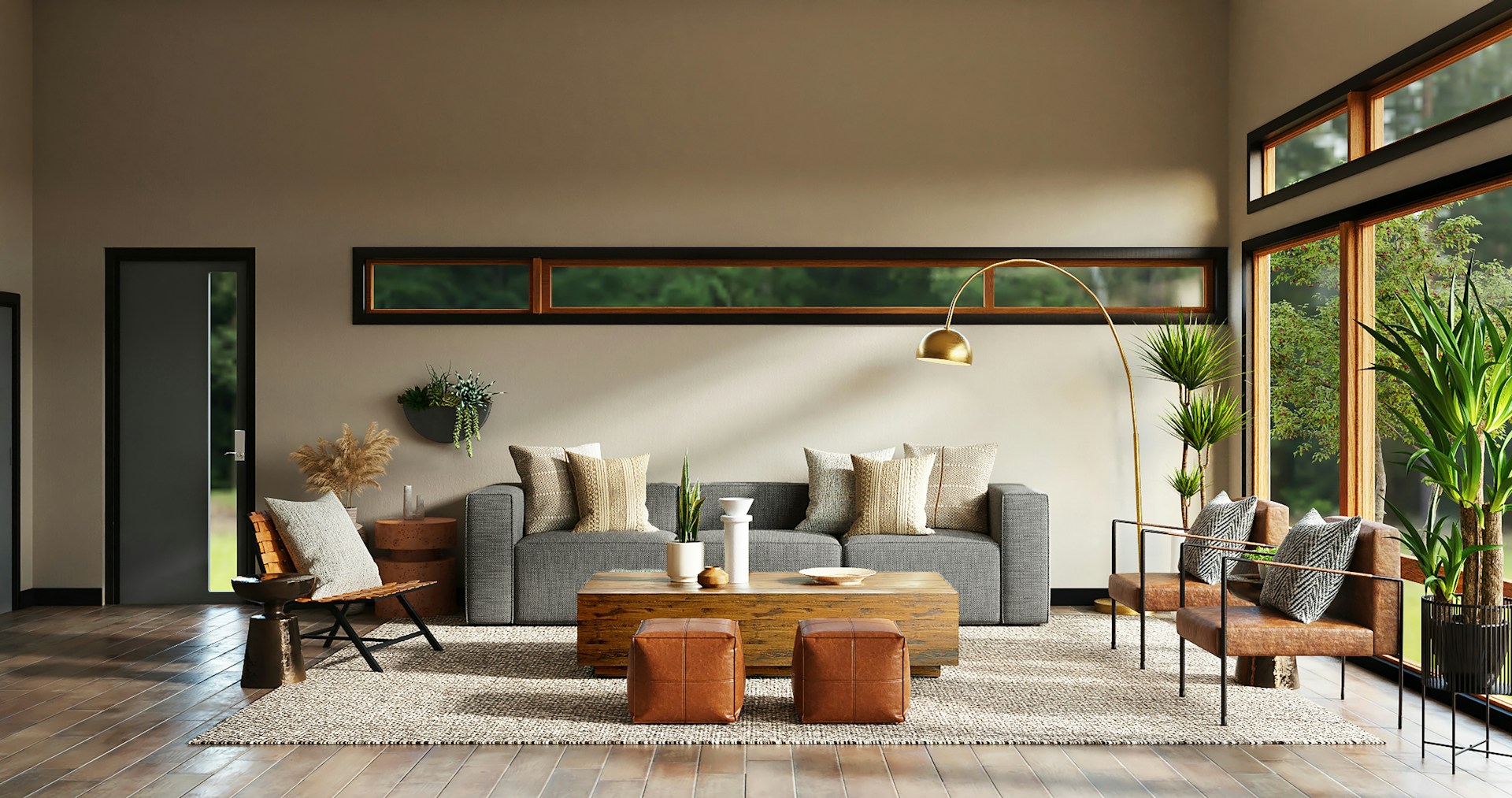
The Secret to Mixing Vintage and Modern Pieces Without Creating Clutter
Many people tend to think that when a room full of mixed eras doesn’t work, it’s the furniture’s fault. The antique chest is just not meant to be with the contemporary sofa. But, in fact, that’s rarely the issue. It’s usually that the room has no hierarchy; every single piece is trying to get the same amount of attention, and your eye doesn’t know where to land.
Getting this right isn’t just a happy accident, or a talent you’re born with – it’s a series of decisions you make before anything even gets moved in.
Negative space is doing more work than you think
The natural inclination with vintage or flea market finds is to surround them with other interesting things. That’s exactly what makes a room feel like a flea market. Patina and texture only read as sophisticated when they have room to breathe. Place a rough-hewn antique chest against a clean white wall with nothing flanking it, and it looks intentional. Crowd it with other objects of similar visual weight, and it disappears into noise.
Negative space isn’t emptiness – it’s a deliberate editorial choice. Rooms that feel high-end almost always have more open space than the owner is comfortable with at first. If you’re styling a surface with a mix of old and new objects, two or three pieces is a ceiling, not a floor. For readers who want to understand exactly which elements push a room from "nice" to genuinely elevated, this interior design guide breaks down the specific decisions that create a premium atmosphere.
Start with a hero, not a mood board
One element is essential in any room to make sure it comes together effectively. Only one. Not two. Not several. Just one. It could be a classical gilded mirror, a cozy modern sofa in a solid dark shade, a rough-hewn oak dining table. But all other choices you make should aim to complement that piece.
If there’s no obvious hero, you default to having a lot of pieces trying to be the star, and that’s when the whole thing feels cluttered. Not because there are many things, but because there are many things that are all demanding equal attention. That’s exhausting.
Once you’ve established your anchor, it’s also easier to stick to the 80/20 rule. Eighty percent of the room should read as if it comes from one era, and twenty percent should do the work of contrasting with the rest. This keeps the eye enough breathing room, while still hitting on the old/new tension that makes a room feel designed, not just decorated.
Color does the bridging that style can’t
Combining pieces from different eras is not difficult as long as they have the same wood tones, for example. This coherence does not seem accidental, but planned. And planning is the difference between a well-designed room and a cluttered one.
A consistent color theme can cross eras since our brains perceive color before style. If the older piece and the newer one share warm amber hues, they will seem like a set even if they are six decades apart. The same applies to metallic colors. Unify matte brass with a modern brushed brass rendering. The result is a room that works without appearing too matched.
63% of professional designers report that "mixing eras" is the most requested design style, surpassing any single-era aesthetic like strictly modern or strictly traditional (1stDibs Interior Design Trend Survey). The people who want it don’t want maximalism – they want a room that feels like it’s been developed over the years, not bought in a day.
Lighting is the detail most people postpone
Vintage pieces have texture – patina on brass, grain in old wood, the slight imperfections in hand-thrown ceramics. Poor lighting flattens all of that. A dim overhead fixture makes aged pieces look dusty rather than distinguished, and no amount of careful curation survives bad lighting.
Modern lighting paired with vintage objects is one of the highest-return moves in this kind of room. A sleek floor lamp with a metal arm next to a worn leather chair makes both pieces look better. Recessed lighting above open shelving lets the texture of older objects show without throwing visual clutter into the mix. The light source itself – clean, controlled, contemporary – acts as a transition piece between eras.
The shift from collecting to curating
Someone who builds a room with intention is quite different from someone who buys things they like. Collectors accumulate. Curators select, and subtract, too.
But the rooms that manage it aren’t the ones where the most fascinating pieces have been assembled. They’re the ones in which somebody painstakingly decided what wouldn’t fit. A Victorian mirror that forces one to notice and admire it because nothing else in the room will compete with it will always work harder, and provide more pleasure, than the same mirror in a room where six equally fabulous things are all trying to do that at once.
Restraint isn’t timidity. In mixed-era interior design, it’s the whole point.